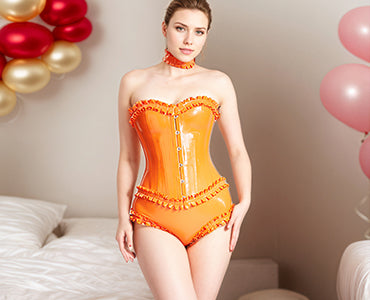


Latex vs. Rubber: A Fashion Lover’s Handbook
In recent years, materials like latex and rubber, once saved for niche communities, have made a stunning entrance into high fashion. Both offer a bold, striking look that commands attention, but they are not the same thing.
Latex and rubber are frequently compared because they can appear similar, offering a sleek, body-hugging silhouette. This post will explore the distinct worlds of latex and rubber fashion, helping you understand the unique appeal of each and decide which one is right for your wardrobe.

What is Latex Fashion?
When people talk about modern, high-shine fashion, they are most often referring to latex. This material has a fascinating history and a set of characteristics that make it truly one-of-a-kind.
Origins and History of Latex in Fashion
Latex as a fashion material burst into the avant-garde scene in the 1960s, but it truly gained high-fashion credentials in the decades that followed. Designers have been drawn to its challenging, sculptural properties. Pioneers like Jean-Paul Gaultier famously incorporated it into his provocative collections, while modern designers like Atsuko Kudo have built an entire brand around it, dressing celebrities and royalty alike. Today, latex is a regular feature on runways and red carpets, celebrated for its futuristic and boundary-pushing aesthetic.
Key Characteristics
Latex in fashion is technically "natural rubber latex." It's a natural material derived from the sap of the rubber tree, which is then processed into thin sheets.
-
Feel and Fit: Its most famous quality is its incredible elasticity. This allows it to stretch and hug the body, creating a true "second-skin" effect that is both compressive and supportive.
-
The Finish: Naturally, latex sheeting is matte. Its iconic, high-gloss shine is achieved by applying a silicone-based polish or shiner. This ability to transform from a soft matte to a liquid-like gloss is a huge part of its appeal.
-
The Silhouette: Because it clings so closely to the body, latex creates a sensual, sculptural silhouette that is almost impossible to replicate with woven fabrics.
Pros and Cons
Like any specialty material, latex has its own set of benefits and challenges.
-
Pros: It offers a bold, unparalleled aesthetic. Its body-shaping and smoothing qualities are a major draw. It is also surprisingly versatile and can be styled for high-fashion, clubwear, or intimate settings.
-
Cons: Latex is notoriously high-maintenance. It can be difficult to put on without a dressing aid, is sensitive to heat and sunlight, and is not breathable. It also requires special care to prevent tearing and staining.
Despite the maintenance, the visual reward is often worth the effort. For those ready to make a statement, exploring pieces like latex dresses for women can be the perfect introduction to this incredible material.

What is Rubber Fashion?
The term "rubber fashion" is broader and often includes latex. However, when used to describe a separate category, "rubber" typically refers to heavier, more durable, or synthetic forms of the material.
The Evolution of Rubber in Fashion
Before rubber was a fashion statement, it was purely functional. Vulcanized rubber was used to create waterproof raincoats (like the original Mackintosh) and industrial protective clothing. This association with durability and protection eventually caught the eye of alternative subcultures. Fetish fashion, in particular, adopted "heavy rubber" for its more restrictive, armor-like, and industrial feel, a sharp contrast to the high-shine elegance of thinner latex.
Key Characteristics
Rubber garments are often, but not always, made from synthetic rubber (like neoprene) or a much thicker-gauge vulcanized natural rubber.
-
Feel and Fit: These garments are significantly more durable and often thicker than latex. They feel heavier and are more structured, meaning they hold their own shape rather than just conforming to the body.
-
The Finish: While some rubber can be shined, it is most often seen with a matte or a very subtle, dull sheen.
-
The Silhouette: Rubber clothing creates a more rigid and structured silhouette. It doesn’t have the "painted-on" look of latex; instead, it imposes its own shape.
Pros and Cons
-
Pros: The primary advantage is durability. Rubber is highly resistant to tears and damage, making it a workhorse material for long-term wear. Its unique, heavy texture is an aesthetic choice in itself.
-
Cons: That same durability means it is much less flexible than latex. It can feel heavy and cumbersome. It is also more difficult to mold into the complex, delicate designs that are possible with thin latex sheeting.
Latex vs. Rubber
So, how do these two materials stack up head-to-head? Let's break down the key differences.
Aesthetic Differences
The biggest difference is in shine and texture. Latex is prized for its ability to achieve a liquid, high-gloss finish that highlights every curve. Rubber, in contrast, is typically matte and has a more industrial or utilitarian texture. In terms of silhouette, latex creates a second-skin effect that sculpts the body, while rubber’s more rigid structure builds a shape of its own.
Comfort and Wearability
Comfort is subjective here. Latex is lightweight and stretches with you, but it is not breathable and can feel very restrictive. Rubber is much heavier and stiffer, which some may find uncomfortable. However, because it's less delicate, you might feel more at ease wearing it without fear of an accidental rip.
Durability and Care
This is a major deciding factor. Latex is delicate. It is prone to tearing from sharp fingernails, must be protected from heat and sunlight (which can make it brittle and discolored), and stains permanently on contact with metals like copper or brass. Rubber is the clear winner in durability. It can withstand much more wear and tear and is generally easier to clean and store.
Fashion Trends: Where Are They Seen?
You will see high-fashion latex on runways and red carpets. It's the go-to for celebrities and designers looking to create a sleek, futuristic, and overtly sensual look. Rubber is more common in street fashion (think neoprene "scuba" hoodies), alternative subcultures, and fetish wear, where its "heavy" and durable properties are highly valued.
Which Material is Right for You?
Choosing between latex and rubber depends entirely on your style, the event, and your commitment to maintenance.
-
Choose latex if: You want the ultimate high-shine, "painted-on" look. You are drawn to a body-contouring, sculptural silhouette and are willing to learn the special care steps required.
-
Choose rubber if: You prioritize durability and a more structured, industrial, or matte look. You want a heavier-feeling garment and prefer something that doesn't require as much delicate handling.
For both materials, proper care is key. Latex requires silicone polish for shine and talc or a dressing aid to put on. Rubber is simpler but should still be cleaned and stored correctly.
Conclusion
While latex and rubber are related, they offer two very different fashion experiences. Latex is the delicate, high-shine star of the couture world, famous for its second-skin fit. Rubber is its tougher, more industrial sibling, valued for durability and a structured, often matte, aesthetic.
Both materials are powerful forms of self-expression. They invite you to step out of the ordinary and embrace a style that is bold and unapologetic. Whether you're drawn to the liquid gloss of latex or the sturdy feel of rubber, we encourage you to experiment and find the look that speaks to you.
For Latex Fashion, you can find a huge variety of styles, from beginner pieces to elaborate full-body latex costumes, to start your journey. We invite you to share your own experiences with latex or rubber fashion with us.
FAQs
Can latex and rubber clothing be worn in everyday situations?
It can be, but it's most common in "statement" pieces. A latex pencil skirt or a neoprene bomber jacket can absolutely be integrated into a daring everyday wardrobe. Full catsuits are typically reserved for club nights, events, or photoshoots.
What are the best ways to care for latex or rubber clothing?
For latex: Wash by hand immediately after wear, use 100% silicone polish for shine, and store in a cool, dark place away from metal and sunlight. For rubber: Generally, it can be hand-washed with mild soap and water and is much less sensitive to its storage environment, though keeping it out of extreme heat is still a good idea.
How can I style latex or rubber fashion for a unique look?
Try mixing textures. Pair a shiny latex top with a soft, matte fabric like cashmere or denim. Use a structured rubber accessory, like a harness or belt, to add an industrial edge to a simple dress. The key is contrast!
Related reading: